BY:
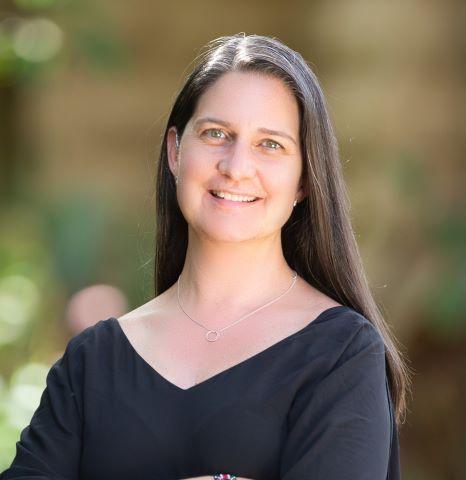

Remarks by FSD Kenya CEO at the joint launch of the National Financial Inclusion Strategy NFIS), Medium Term Plan IV for the financial services sector, and the Women Entrepreneurs Finance Code - 4th December 2025
December 17th, 2025
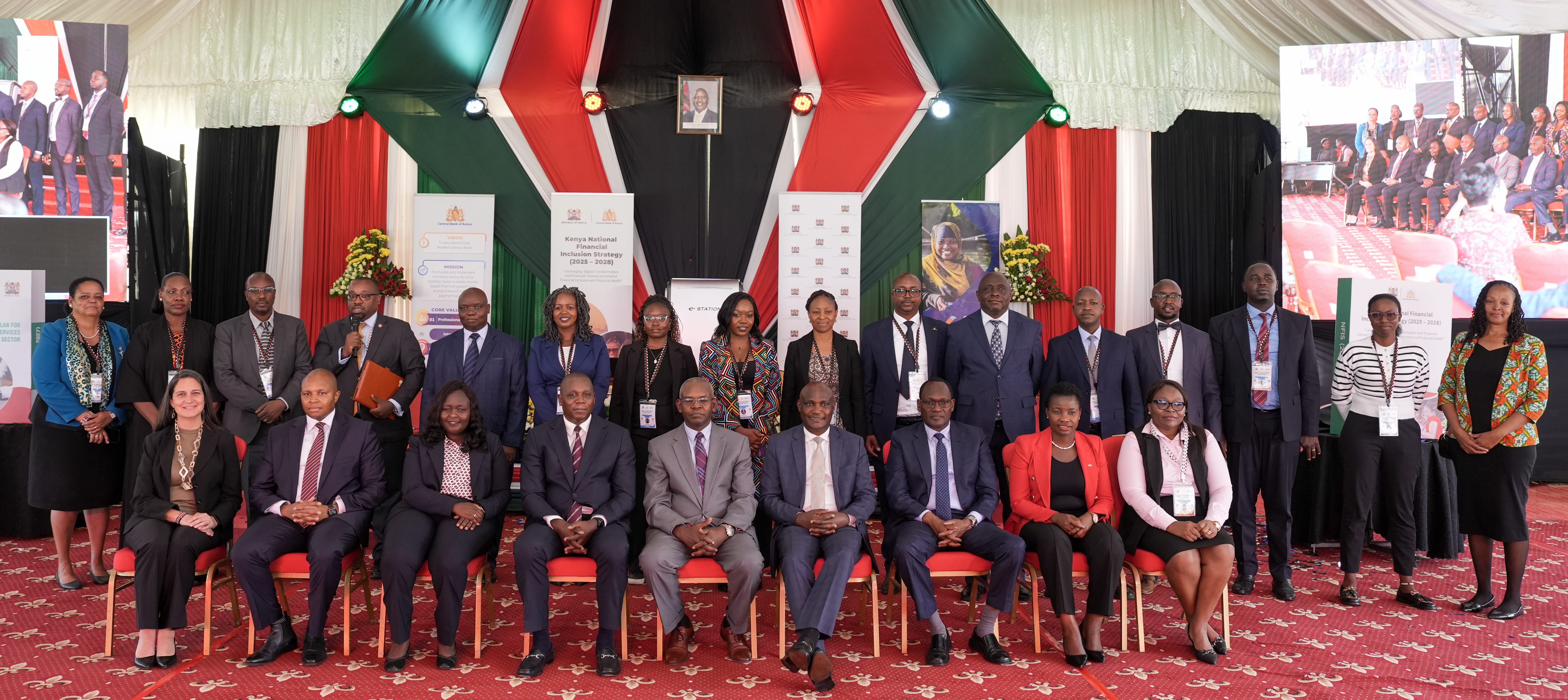
As I look out on the crowd it is inspiring to see leaders from every corner of the private and financial sectors, from an array of development partners, and from across the Government of Kenya. It is not a surprise to see the financial sector regulators but we also have others such as the State Department of Micro small and Medium enterprises and the State Department for Gender and Affirmative Action. These other parts of government have played a critical role in the process because they know they know that financial inclusion can enable the development priorities of Kenya. This mosaic of participation is a reflection of the process that brought us to where we are today in launching these three initiatives:
- National Financial Inclusion Strategy 2025 – 2028 (NFIS)
- Medium Term Plan IV 2023-2027 – Sector plan for the financial services sector
- Women Entrepreneurs Finance Code (WE Finance Code)
FSD Kenya has had the privilege to participate in these stakeholder discussions which have spanned years. One memory that stands out is a workshop hosted by National Treasury in October 2022 where the leaders in the financial services sector were considering what the “transformational agenda” for MTP IV should be in the financial services sector to achieve Kenya’s national development goals.
I remember a similar gathering here in this facility in September 2024 where the formal launch of the NFIS process began under the leadership of the Central Bank of Kenya represented by the Deputy Governor. But from the start, it was always a multi-stakeholder initiative with the chair of the Joint Financial Sector Regulators also speaking. The recent launch of the financial sector specific reports of FinAccess 2024 are another testament to the value and importance of demand-side data is helping regulators understand the reality of Kenyans on the ground to consider how to empower all Kenyans with a broad range of high-quality, impactful & affordable financial services (as the NFIS Vision states.) Other initiatives such as the County level financial literacy trainings which I had the honour to join in Nyeri, are another example of ensuring that everyone is involved. Training trainers to help people better understand what their options are in terms of financial literacy.
The Women Entrepreneurs Finance Code is a global initiative but it is connected with the passion that already existed within the sector to find better tools to help women entrepreneurs access finance that will help them grow their businesses, add value to the economy & create jobs. The Code is being signed today but like all three of these launches the next steps of action on the journey is what will lead to impact.
I would like to direct your attention to the poster behind me showing this woman here. Her name is Rehema and I met her in Vanga on the coast near the border with Tanzania. She was part of a research project that we were doing on Small firms. She is one of the savviest businesswomen I’ve ever met running a business processing sardines. She lacked access to a wide range of financial solutions that met her needs even though she had a thriving business. She used mobile money and mobile savings but found little use for the bank account she had opened since it was so far away. She started her business with a loan from her sister and values her women’s savings group. She was even a financial services provider herself. She provided credit to those she sold sardines too and to her employees. She even provided credit to the fishers she bought fish from when they had a bad day on the water. There is no bank branch in Vanga. There’s only one bank agent in Vanga and it is only sure to be open during school fees times. Rehema is an example of how we can unlock more jobs and economic opportunity for women entrepreneurs through the initiatives that we’re talking about today. She is not just a beautiful smiling face – she is a picture of what we are all hoping for in the future. Watch Rehema’s story in this video.
The Deputy Governor did an excellent job in championing the WE Finance Code and we would like to invite more of you to join in the signing of the initiative. Collective action is going to be the key to success in reaching the desired outcomes.
Frankly, in many countries, NFIS and even the WE-FI code may be seen as a niche activity more relevant for the social sector. It is a real testament to the high-level commitment of the Government of Kenya that they are being launched in tandem with each other but more importantly with the overall sector plan for the financial services sector in a mutually reinforcing way. This shows us that financial inclusion, financial health, women, entrepreneurs, are core priorities of the Government of Kenya.
This may be our first national financial inclusion strategy in Kenya. But the reality is that since Vision 2030 was launched, every Medium Term Plan has prioritised efforts to increase access to finance and the impact of that finance for enabling and unlocking economic development in Kenya. So we’ve had an NFIS, it was just embedded in these medium term plans. Today is an effort to expand and enhance that commitment to financial inclusion.
Kenya is not only a recognised leader globally in financial inclusion but it was also one of the first countries to adopt a national measurement of financial health. Several speakers have already mentioned that significant gap between high financial inclusion and low financial health. The tagline of the NFIS captures so much of our hopes for Kenya and what all three of these initiatives are hoping to build on the progress that’s already been made.
It started with “Leveraging Digital Transformation” and this appears throughout with 162 mentions in the text. Digital is the building block that we have in Kenya that has enabled access to finance and innovation leading to more financial solutions for more people. The next line is about “Leveraging Financial Literacy” which appears 89 times but it is not just about informing them about finance but it is also giving them the tools to make good decisions about whether the solution in front of them is affordable (which is mentioned 48 times by the way) and whether they are being protected, whether it is transparent. Consumer protection shows up 55 times in the NFIS.
The tagline then ends with the idea of enhancing starting with the first clause to “Enhance Financial Inclusion.” There are some people who would say “Kenya’s already financially included, why are you launching a financial inclusion strategy?” Yes, there are 10% who are still financially excluded and they are very important. Youth are mentioned 61 times and women/gender mentioned 112 times – these are some of the pockets of exclusion that still exist when we think about financial inclusion in Kenya. We also need to think of those who have extra barriers to finance such as refugees and people with disabilities (mentioned almost 50 times). I would like to thank the Central Bank of Kenya for having sign language at this event so that those of you who can hear can hear what I am saying but we can all understand what we are trying to launch here today. Being intentional about that is really important. The Kenya Banker’s Association showed incredible leadership in helping provide tools for bankers to reach hearing impaired clients through the Deaf Elimu app. Another example is Safaricom’s Braille watch which allows blind people to receive texts in privacy including their M-Pesa transaction details.
Finally the tagline ends with to “Enhance Financial Health” which refers to managing day to day, dealing with risks, and investing in the future. In Kenya, 39% of people said that someone in their household had “slept hungry” in the last month. That is not acceptable. That is not being able to manage day to day. So what are the financial tools that we can provide for people so that no one is sleeping hungry. When we think about dealing with shocks or risks, we think of the farmers who are dealing with a drought or a flood that is impacting their ability to earn for their families and feed their families. It is great to see the references to climate and environment which are the reality on the ground not only for farmers but also for entrepreneurs and so many families across Kenya. We need be more resilient. It is great to see both the NFIS and MTP emphasizing green finance solutions. And finally how do we invest in the future? I was first a loan officer here in Kenya and the first loan I recommended to the credit committee was a woman selling dresses on River Road who wanted to grow her business but no one would lend her money because she did not have collateral. So how do we provide tools that look at alternative sources of collateral and other ways of enabling women like her to be able to invest in their futures not just for themselves but for their families and their communities.
As we think about the vision of the Sector plan “to create a vibrant and globally competitive financial sector that will promote a high level of savings to finance Kenya’s investment needs.” Financial health is a way that everyone can have an increase in savings that can help us achieve this vision.
As I close, I will speak in the context of my next role after FSD Kenya.
In her role as the United Nations Secretary General’s Special Advocate, Her Majesty Queen Máxima of the Netherlands, has been deeply engaged in the evolution of the inclusive finance in Kenya with players across the public and private sector. Her impactful visit here in 2023 and her global leadership in promoting financial health was what drew me to my next role as the Incoming Director of her office at the UN next month. This will be an opportunity to help bring what we are learning here in Kenya to a global platform. I am deeply sad to leave Kenya but I guarantee that Kenya will not leave my heart.
It is my honour to read an official quote from Her Majesty that you can also find on page 16 of the NFIS.
“Kenya’s new National Financial Inclusion Strategy marks a major milestone — not only in expanding access, but in ensuring that financial services truly improve people’s lives. By placing financial health at its core, the Strategy recognizes that inclusion is not just about having an account, but about resilience, opportunity, and confidence for every Kenyan. I commend the Central Bank, the National Treasury, and all partners for this leadership, which will serve as an inspiration for countries across the region and beyond.” – Her Majesty Queen Máxima of the Netherlands, United Nations Secretary-General’s Special Advocate for Financial Health
Asanteni sana
TAGS
CATEGORIES
You might also like
September 24th, 2026
Smart water project launched in Kajire to deliver affordable, safe water to local communities
Communications
August 31st, 2026
Women, gum arabic and the promise of economic inclusion in Samburu
Communications
August 31st, 2026
How SUED is translating planning into finance, and finance into jobs
Duncan Oyaro
August 28th, 2026
From long journeys to local economic opportunity: Lentam Ntarawe’s gum arabic journey
Communications


